Food Delivery Platforms vs. Own Payment Links: A Guide to Costs, Margins, and Order Diversion for Hong Kong Restaurants
Which is more cost-effective: food delivery platforms or your own payment links? This article compares platform fees, delivery, customer acquisition, gross margins, repeat orders, and reconciliation costs, and provides strategies for Hong Kong restaurants to diversify their orders.
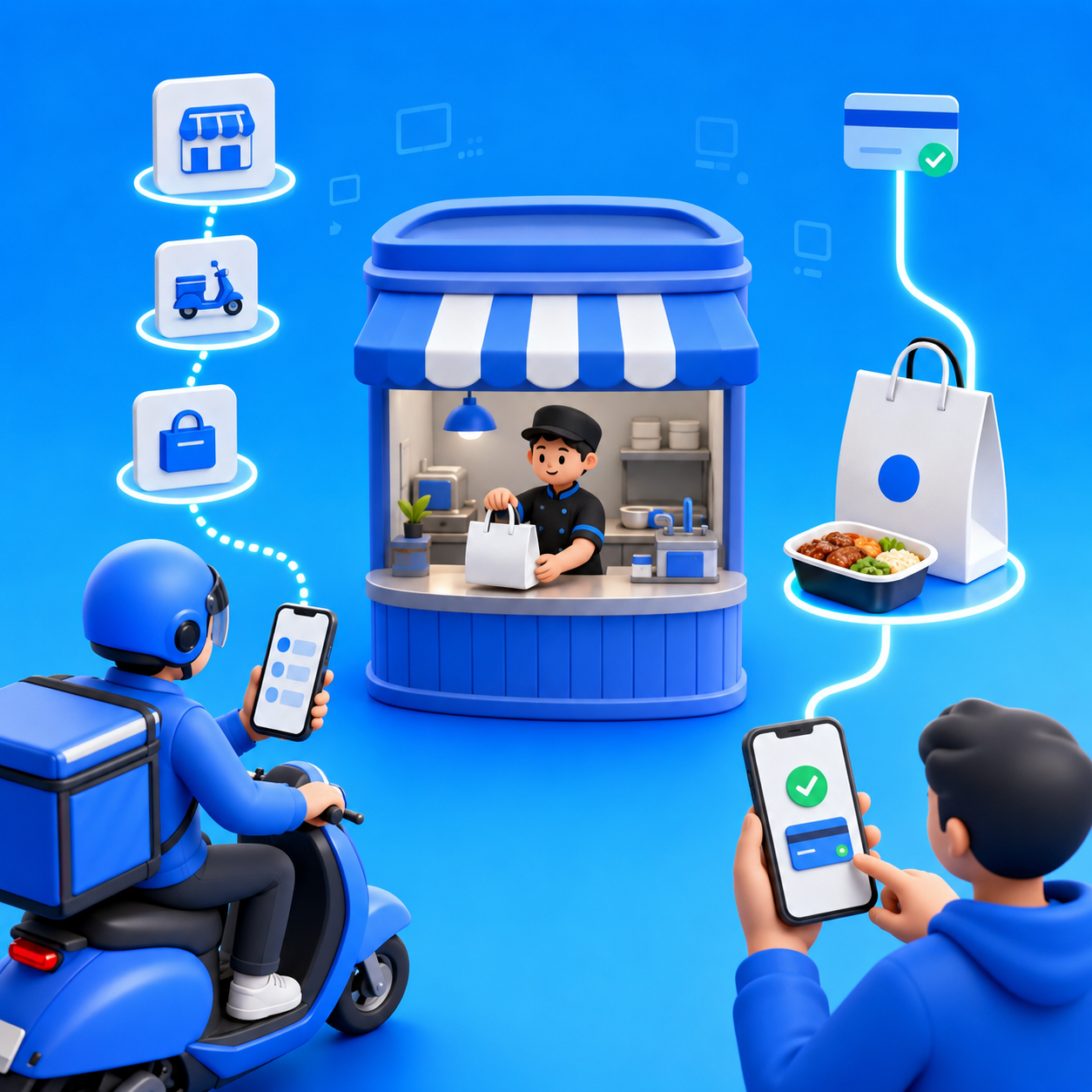
For Hong Kong restaurants, food delivery platforms and proprietary payment links are not entirely interchangeable tools. Food delivery platforms typically offer exposure, ordering, payment, delivery, and customer service; proprietary payment links primarily help restaurants collect payments directly from customers with whom they already have contact. Their functions differ, so it's not enough to just compare surface-level transaction fee percentages.
Simple answer: If an order comes from a platform search and the restaurant needs platform delivery, platform fees can be seen as customer acquisition and fulfillment costs. However, if the order is from a repeat customer, WhatsApp, phone, social media, or corporate client, a proprietary payment link is usually more beneficial for controlling pricing, gross margins, customer relationships, and reconciliation processes.
Why do food delivery platforms' actual costs go beyond just commission?
When calculating platform order costs, restaurants often focus only on commission rates, overlooking other potential costs for the same order, such as menu price markups, shared platform promotional expenses, delivery or service surcharges, packaging, labor, refunds, settlement cycles, and the inability to directly capture customer data.
The Hong Kong Consumer Council previously test-purchased 91 times from 9 food ordering platforms, involving 137 food items. Of these, 83 items (61%) had higher prices on the platform than for restaurant pick-up, with price differences ranging from 3% to 86%. This illustrates that the total price customers see for a delivery order can be affected by both menu pricing and various surcharges. It is advisable to include the link to the original survey and its publication date before publishing, to allow readers to verify the information.
- Platform commission or service fees: Varies by platform, partnership plan, and promotional arrangements.
- Promotion and discount costs: Discounts may not be fully covered by the platform; actual contracts should be reviewed.
- Delivery and packaging costs: Varies depending on platform delivery, self-delivery, or self-pickup models.
- Refund and customer complaint costs: Incorrect or missing orders and refunds increase frontline processing time.
- Settlement and cash flow costs: The speed of payment settlement affects procurement, payroll, and daily working capital.
- Customer relationship costs: Restaurants may not have complete access to customer data and repurchase paths.
What's the difference between food delivery platforms and your own payment links?
| Comparison Item | Food Delivery Platform | Own Payment Link |
|---|---|---|
| Primary Function | Drives traffic, ordering, payment, and delivery | Collects payments directly from existing restaurant customers |
| Customer Source | Platform search, recommendations, and promotions | WhatsApp, phone, social media, website, corporate clients |
| Cost Structure | Commissions, promotions, delivery, refunds, etc., can stack up | Payment processing fees, delivery, and self-managed order taking costs are calculated separately |
| Pricing Control | Must align with platform rules and promotions | Restaurants set their own menu prices, minimum orders, and pickup arrangements |
| Delivery | Can be fully managed by the platform | Restaurant self-delivery, outsourced fleet, or pickup only |
| Customer Relationship | Customers primarily interact within the platform | Restaurant directly handles inquiries, payments, and repeat orders |
| Reconciliation | Reconciled based on platform reports and settlement periods | Reconciled based on payment records, order numbers, and delivery confirmation |
| More Suitable For | New customer searches, impromptu orders, orders requiring delivery | Repeat customers, group meals, pre-orders, pickup, and recurring orders |
How to calculate the true cost of each food delivery order?
Instead of just comparing commission rates, restaurants should judge based on 'gross profit contribution per order.' You can start with this simplified formula:
Order Gross Profit Contribution = Amount Received - Food Cost - Packaging - Channel Fees - Delivery Subsidy - Discount Allocation - Additional Labor/Refund Costs
When calculating, actual contract figures and monthly statements should be used, not market rumors. Proprietary payment collection is also not zero-cost: restaurants still need to handle order taking, labor, delivery, refunds, and promotions. The true comparison should be the total cost and net revenue of the same type of order across both channels.
Example: Where should a HK$300 repeat customer pickup order be placed?
| Item | Via Food Delivery Platform | Via Own Payment Link |
|---|---|---|
| Customer Source | Already actively ordered via WhatsApp | Already actively ordered via WhatsApp |
| Order Amount | HK$300 | HK$300 |
| Channel Fees | Substitute restaurant's actual platform commission and activity costs | Substitute payment service fee rate and transaction fee |
| Delivery | Pickup, so platform delivery value is lower | Pickup, no need to purchase separate platform delivery |
| Key Decision Factor | Whether platform traffic or operational functions are still needed | Whether the channel cost savings are higher than the cost of self-managing orders |
This example does not assume one side is necessarily cheaper. Restaurants simply need to plug in their actual percentages, fixed fees, and labor costs to see the difference in net revenue for the same repeat customer order.
Which orders are suitable for platforms? Which are suitable for direct payment?
| Order Scenario | Recommended Channel | Reason |
|---|---|---|
| New customers searching for nearby restaurants | Prioritize Platform | Platforms offer exposure and comparison entry points |
| Impulse order requiring immediate delivery | Prioritize Platform | More complete delivery network and order flow |
| WhatsApp / Phone repeat customer pre-order | Prioritize Direct Payment | Customer base already exists, may not need to repurchase platform traffic |
| Corporate lunch, school or clinic group meals | Prioritize Direct Payment | Amount, time, and delivery can be confirmed in advance |
| Regular neighborhood pickup or pre-ordered meal boxes | Prioritize Direct Payment | High repeatability, easier to establish standard processes |
| Restaurant has no self-delivery capability | Platform or Hybrid Model | Retain platform delivery first, then test some pickup orders |
Most practical approach: Use platforms for new customers, own channels for repeat business
Many restaurants don't need to choose between the two. A more viable approach is to position platforms as a new customer acquisition and delivery channel, while simultaneously building in-house order-taking and payment processes to handle existing repeat customers, group clients, and pre-order needs.
- First, categorize order sources. Mark platform, new customer, repeat customer, corporate, phone, WhatsApp, and social media orders in your POS or spreadsheet.
- Calculate gross profit contribution for each channel. At a minimum, track order amount, channel fees, discounts, packaging, delivery, and refund costs.
- Select low-risk direct order scenarios. Start with repeat customer pickup, corporate meals, or pre-ordered meal boxes, rather than transferring all orders at once.
- Establish confirmation and payment processes. After receiving an order, confirm the amount, pickup/delivery time, and contact information, then send a payment link for the specified amount.
- Add an order reference to the payment. Match order numbers, customer names, or pickup times with transaction records to reduce reliance on screenshots for reconciliation.
- Review results monthly. Compare repurchase rates, gross profit per order, refund rates, reconciliation time, and fund settlement speed, then adjust diversion ratios.
How to use Wonder App to process restaurant payment links?
For restaurants with existing customers from WhatsApp, phone, Instagram, Facebook, or corporate catering, Wonder App's online payment links can serve as a direct payment tool. After a restaurant confirms an order and its amount, it can create and send a payment link to the customer; once payment is complete, the restaurant arranges food preparation, pickup, or delivery.
The value of such a process lies in centralizing payment status records, reducing the need for verbal confirmation or back-and-forth inquiries about transfer screenshots. If the article lists online payment rates, surcharges, or T+0 same-day settlement fees, it should be verified with Wonder's official latest pricing page and merchant terms before publication, and state 'Actual rates and eligibility are subject to the latest plan' to avoid outdated content.
7 things restaurants should confirm before evaluating payment links
- Which credit cards, e-wallets, or other payment methods can customers use?
- Are there percentage fees, fixed fees, or minimum charges per transaction?
- What are the processes and fees for refunds, partial refunds, and cancellations?
- How long does settlement take? How are weekends and public holidays handled?
- Can order numbers or other reference information be added to payment records?
- Do payment links have an expiration date, amount limits, and security verification?
- How can restaurants legally and transparently handle any surcharges and customer notifications?

FAQ: Frequently Asked Questions about Food Delivery Platforms and Own Payment Links
1. Are own payment links always cheaper than food delivery platforms?
Not necessarily. If an order relies on platform exposure and delivery, platform fees include customer acquisition and fulfillment value. If a customer has already contacted the restaurant directly, a payment link usually more closely represents pure payment costs.
2. Can restaurants completely stop using food delivery platforms?
Yes, but it may not be suitable for every restaurant. New establishments, hidden gems, or restaurants reliant on immediate delivery may still need platforms for new customer acquisition and logistical capabilities. A hybrid model is often easier to test.
3. Which orders are most suitable for using payment links?
Repeat customer pre-orders, WhatsApp or phone orders, corporate group meals, event meal boxes, regular pickups, and remote orders with confirmed amounts.
4. Can payment links replace online ordering systems?
Payment links primarily handle payment collection and do not necessarily include menus, inventory, delivery, kitchen order printing, or customer service. Restaurants still need to establish clear order-taking and fulfillment processes.
5. What data should restaurants track when comparing channels?
It's recommended to track gross profit contribution per order, repeat customer ratio, direct order ratio, refund rate, average reconciliation time, delivery costs, and fund settlement speed.
6. What are the problems with relying solely on transfer screenshots?
Screenshots may lack order details and increase the risk of repetitive reconciliation, mismatches, and debt collection issues. The ideal approach is to link each payment to an order number, amount, and payment status.
Summary: It's not about comparing single rates, but the total value of each order
Food delivery platforms are suitable for orders requiring exposure, searchability, and delivery; proprietary payment links are better for repeat customers, corporate clients, pre-orders, and pickup orders where the restaurant already has an established customer base. Restaurants don't need to rush to fully switch channels, but should first categorize by order source and then calculate the gross profit contribution per order using actual contract data.
When platforms bring in new customers and proprietary channels handle repeat business, restaurants can maintain exposure while gradually improving price control, customer relationships, and reconciliation efficiency.

You may also like