
Choosing the Right Payment Solution for Hong Kong Jewelry Stores: High-Value Transactions, Deposits, Balances, Large Transaction Records, and Store Reconciliation Guide
For a jewelry store in Hong Kong, payment collection isn't just about 'completing a transaction.' Jewelry retail often involves high-value items, diverse payment habits of local and tourist customers, deposits for custom jewelry, final payments upon delivery, immediate sales at exhibitions, and the need to meticulously record large transactions.
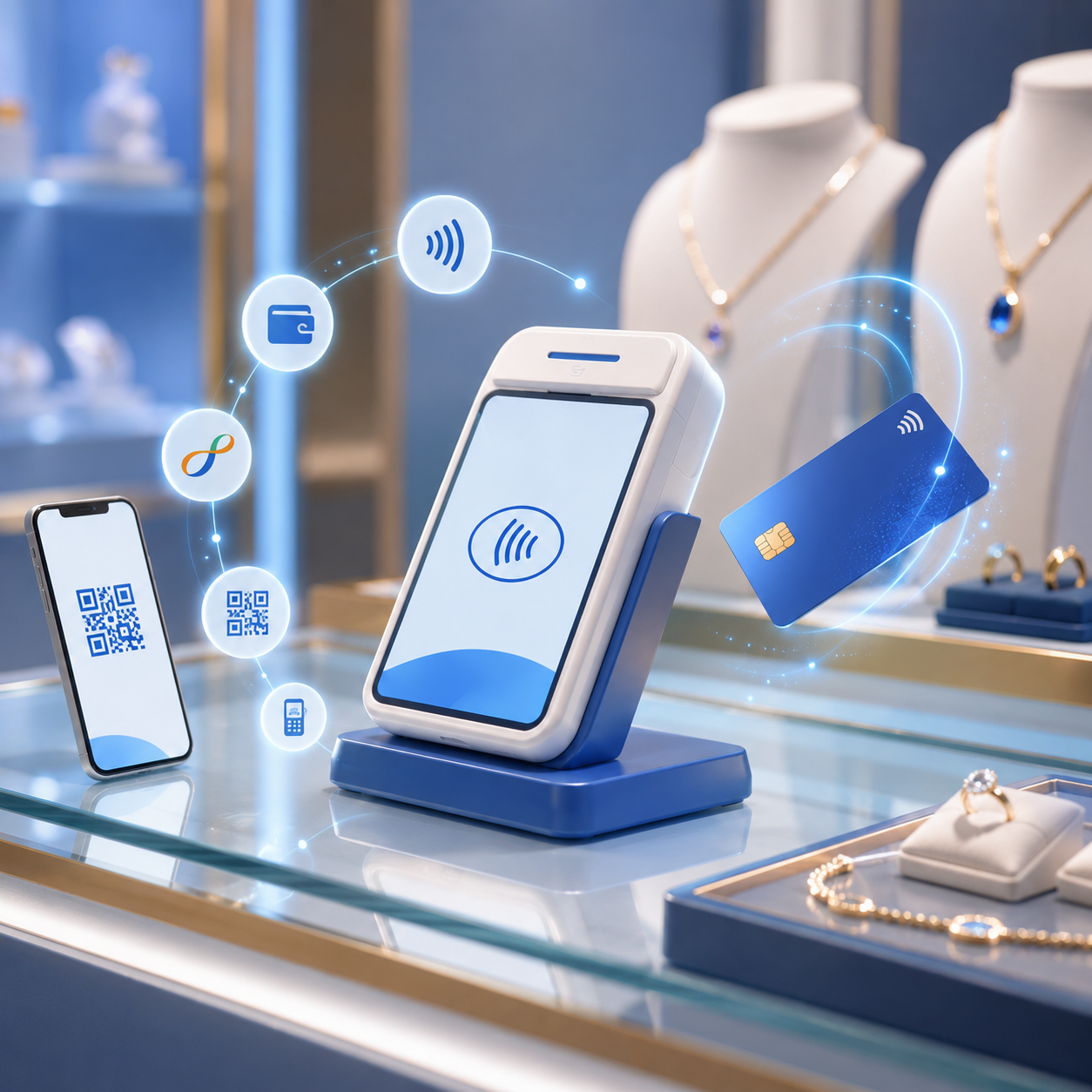
For a jewelry store in Hong Kong, payment collection isn't just about 'completing a transaction.' Jewelry retail often involves high-value items, diverse payment habits of local and tourist customers, deposits for custom jewelry, final payments upon delivery, immediate sales at exhibitions, and the need to meticulously record large transactions.
Therefore, when selecting a payment solution for a jewelry store, you shouldn't just compare transaction fees or whether a single card machine can accept cards. Instead, consider payment method coverage, transaction limits, deposit and final payment processes, refund and cancellation records, in-store reconciliation, and the ability to support internal review requirements for large transactions.
Why does jewelry store payment collection require more planning than general retail?
Most general retail focuses on small, on-the-spot payments, but jewelry stores typically have higher average transaction values, longer customer decision-making times, and payments that may be split into multiple stages. If deposits, final payments, refunds, and different payment channels are scattered across multiple devices, bank statements, and handwritten receipts, store managers or finance personnel will find it very difficult to quickly verify each transaction.
Common pain points include:
• Customers want to use credit cards, UnionPay, mainland e-wallets, FPS, or other local payment methods, but frontline staff have to switch between multiple tools.
• Custom jewelry or wedding jewelry requires separate collection of deposits, incremental payments, and final payments upon delivery, leading to easy confusion about transaction purposes.
• High-value transactions require more complete records for future reconciliation, refunds, internal reviews, or compliance inquiries.
• After sales at exhibitions, counters, or pop-up stores, transaction data may not be immediately synced back to the headquarters' backend.
• Settlement times for cash, cards, QR codes, and e-wallets vary, requiring significant manual effort for daily and monthly reconciliation.
6 Key Considerations for Choosing a Jewelry Store Payment Solution
1. Can it support high-value transactions and stable authorization?
Jewelry transactions are typically high-value, so the payment solution should support stable credit card, contactless, chip card, and QR code processes. The store should also confirm that single transaction limits, risk control approvals, transaction failure notifications, refund procedures, and receipt records are clear.
2. Does it cover payment methods commonly used by local customers and tourists?
Hong Kong jewelry stores may serve local customers, mainland tourists, international tourists, and repeat customers. An ideal solution should cover credit cards, UnionPay, major e-wallets, FPS, and QR code payments to minimize lost sales due to insufficient payment options.
3. Can deposits, incremental payments, and final payments be tracked separately?
Custom jewelry, wedding jewelry, repairs, or reserved items are often not paid for in full upfront. The system should ideally link each transaction to a customer, item, order, or invoice, and clearly label it as a deposit, incremental payment, final payment, or refund.
4. Are refund, cancellation, and order modification records complete?
Jewelry transactions may require adjustments due to size modifications, style changes, stock shortages, customer cancellations, or return policies. Refund or cancellation records should preserve the original transaction details, processing time, amount, and responsible staff to avoid future disputes.
5. Is it easy to store records of large transactions?
If transactions involve high-value precious metals, gemstones, or large amounts of cash, merchants should retain customer, transaction, and payment information in accordance with relevant regulations and internal policies. Payment tools cannot replace compliance judgment but can help centralize transaction amounts, dates, payment methods, and records.
6. Can reconciliation accommodate branches, counters, and exhibition scenarios?
In multi-branch or exhibition scenarios, frontline payment data should be quickly synced to the backend. Management needs to view data by date, location, staff, payment method, and transaction status, rather than relying solely on card machine slips or manual Excel spreadsheets.
How should payment collection be arranged for different jewelry sales scenarios?
| Sales Scenario | Recommended Payment Method | Management Focus | Information to Retain |
|---|---|---|---|
| Immediate Sales (In-stock) | In-store terminal payment | Quick transaction completion, reduce queues | Transaction ID, item ID, payment method |
| Custom Jewelry | Deposit first, final payment before delivery | Clear purpose for each payment installment | Customer details, order number, payment stage |
| Wedding Jewelry or Sets | Staged payments: deposit, incremental, final | Avoid mismatching orders and payments | Package name, wedding/delivery date |
| Repair or Modification | Final or incremental payment upon completion | Easy tracking of service fees | Repair order number, reason for incremental payment |
| Exhibition / Pop-up Counter | Mobile terminal or QR payment | Transaction data needs to sync to headquarters | Event name, staff, settlement status |
Payment Method Comparison: How should jewelry stores configure their options?
| Payment Method | Most Suitable Scenarios | Advantages | Notes |
|---|---|---|---|
| Credit / Debit Cards | High-value in-store transactions, tourist transactions | High acceptance, clear receipts | Confirm limits, refund, and chargeback handling |
| UnionPay & Popular Tourist Payments | Tourist clientele, cross-border customers | Reduces payment friction | Coverage subject to latest supplier information |
| FPS / Local E-payments | Local customers, deposits, or incremental payments | Convenient to use, suitable for daily payments | Ensure proper order and transaction matching |
| Payment Links | Remote deposits, reserved items, final payments | Customers can pay without visiting the store | Must include order or invoice reference |
| Cash | Some local customers or special circumstances | Instant completion | Large cash transactions must follow regulations and internal procedures |
Large Jewelry Transaction Records: Internal Rules Beyond Payment Tools
If a jewelry store handles high-value precious metals, gemstones, or large cash transactions, it should retain records in accordance with relevant Hong Kong regulatory requirements, merchant review policies, and its own risk control procedures. The original text mentions a HK$120,000 threshold; before official publication, it is recommended to reconfirm the latest requirements from Hong Kong Customs and relevant regulations to avoid providing outdated or oversimplified compliance information.
A more prudent approach is to consistently retain the following information in daily transactions:
• Customer name or member ID, contact information, and transaction date
• Item name, SKU, order number, or invoice number
• Transaction amount, payment method, transaction ID, and settlement status
• Reason for deposit, incremental payment, final payment, refund, or cancellation
• Responsible staff, store location, counter, or exhibition event name
• If involving large or high-risk transactions, retain necessary internal approval and compliance records
How Wonder Supports Payment Collection for Hong Kong Jewelry Stores?
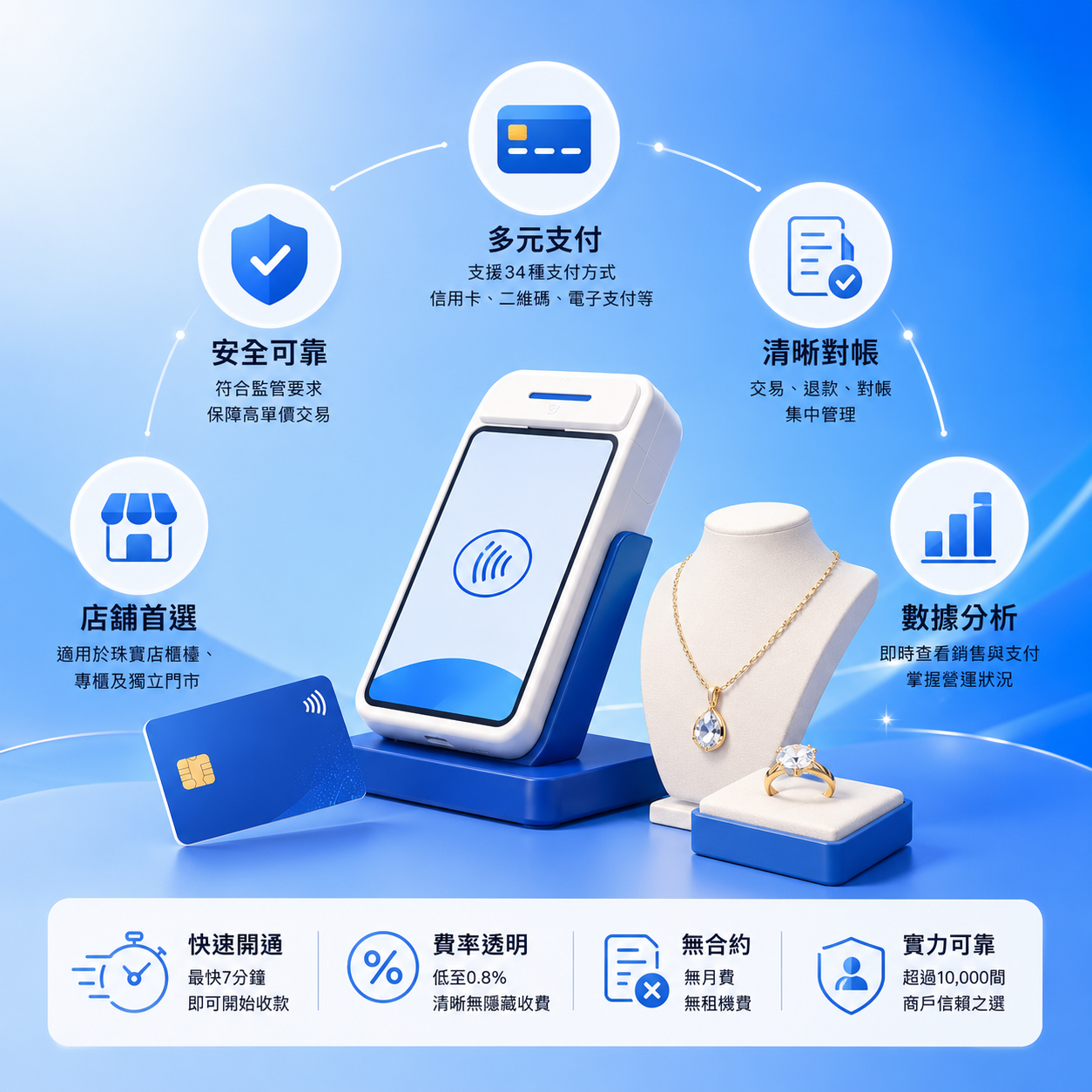
If a jewelry store wants to centralize in-store payments, payment links, deposit/final payments, refunds/cancellations, and reconciliation management, Wonder is a Hong Kong merchant payment solution worth evaluating.
Wonder Terminal is ideal for in-store counters, dedicated counters, exhibitions, or appointment-based sales scenarios; Wonder App can be used for payment links, transaction viewing, and refund management; Wonder Dashboard helps management view records by date, amount, payment method, and transaction status.
For jewelry stores, the key to such a setup isn't just 'another device,' but rather bringing credit card, QR, e-payment, deposit, final payment, and refund records into a single streamlined process. Actual supported payment methods, rates, settlement arrangements, transaction limits, and activation conditions should be confirmed based on merchant type and the latest solution.
Which jewelry stores particularly need to upgrade their payment process?
• Stores that frequently handle high-value in-stock items, diamonds, gold jewelry, or custom-made jewelry.
• Stores that need to cater to the payment habits of local customers, tourists, and cross-border customers simultaneously.
• Jewelry studios that frequently collect deposits, final payments, repair fees, or add-on payments.
• Brands with multiple branches, counters, exhibitions, or pop-up sales scenarios.
• Finance teams that still rely heavily on manual reconciliation for daily settlements, refunds, and different payment channels.
FAQ: Common Questions about Payment Collection for Hong Kong Jewelry Stores
1. Do jewelry stores have to accept credit cards?
Not necessarily, but credit cards are very common for high-value transactions and tourist demographics. If only a few payment methods are supported, it may increase friction in completing sales.
2. Should deposits and final payments be recorded separately?
Yes, absolutely. Custom jewelry, reserved items, and wedding jewelry often involve multiple payments. If each payment can be linked to an order and payment stage, reconciliation and customer communication will be much clearer.
3. Are payment links suitable for jewelry stores?
Yes, they are suitable for remote deposits, reserved items, repair top-ups, or final payments before delivery, but customer, order, or invoice references should be included in the transaction details.
4. Where are jewelry store reconciliations most prone to errors?
Common errors include confusion between deposits and final payments, unclear refund reasons, transactions not matched to items, dispersed records from different payment channels, and relying solely on handwritten receipts or screenshots for verification.
5. Is electronic payment sufficient for large transactions?
No. While electronic payments can make transaction records clearer, large jewelry transactions still require the retention of necessary information according to regulations, merchant policies, and internal procedures.
Summary: A good jewelry store payment solution should support sales, record-keeping, and reconciliation simultaneously
When choosing a payment solution for a Hong Kong jewelry store, don't just look at whether it can accept cards or a single transaction fee. Instead, consider the entire in-store process: assess the stability of high-value transactions, the convenience for tourist payments, clarity of deposits and final payments, completeness of refund records, and whether daily and monthly reconciliation can be completed faster. When each transaction can be linked to a customer, item, and payment stage, frontline service, financial reconciliation, and risk management will all become more organized.
You may also like